The aircraft emergency frequency (also known as guard) is a frequency used on the aircraft radio band reserved for emergency communications for aircraft in distress. The frequencies are 121.5 MHz for civilian, also known as International Air Distress (IAD) and 243.0 MHz for military use, also known as Military Air Distress (MAD). Both are in use at the international level.
The choice of 121.5 MHz was made by the ICAO in conjunction with ARINC and the ITU as a result of its third harmonic frequency relationship with the 40.5 MHz military tactical low band ground-to-air channel. Similarly 121.5 MHz is itself a sub harmonic of the military UHF distress frequency at 243 MHz. This choice gave a number of technical and operational compatibility and efficiency gains in the context of design and proximity interference.
121.5 MHz is monitored by most air traffic control towers, national air traffic control centers, and other flight and emergency services, as well as by many airliners. Separate frequencies exist for military and other government emergency frequencies. If an aircraft violates or is on a trajectory that will violate Restricted or Prohibited airspace, it will be warned of military interception on 121.5 MHz.
The frequency may also be used by ATC to establish contact with an aircraft that has inadvertently switched to an incorrect frequency. As pilots are strongly recommended to monitor 121.5 MHz at all times, a common practice is to set a secondary communications radio in the aircraft (often COMM 2) to 121.5 MHz in order to monitor, but not transmit on, 121.5 MHz. A pilot accidentally transmitting on 121.5 MHz will often hear a reply stating that they are "on guard", i.e., that they are on the guard frequency and should switch to the appropriate frequency instead.


Hamfest India 2010 held at pollachi on 13th and 14th November was a grand success with great eyeball and nice get-together celebrations for all radio lovers . More than 510 HAM's from all over India as well as abroad participated. Around 30 hams and swls attended from Chennai.
biggest stall selling all kind of HAM tech stuff like a Ham radio superstore you find abroad.
Its good news for all the Wouxun brand radio lovers . Already ChennaiHams Team facilitated two lots of imports of Wouxun dualband handies into India with very good user feedback from Indian HAMS in terms of features vs price & overall value for money. 


http://groups.google.com/group/chennaihamsblogspotcom/files?report=1
ChennaiHamsBlogspot Team

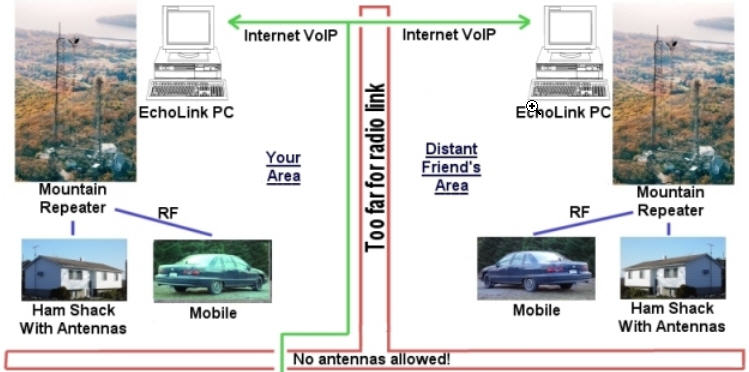
Chennai hams have now managed to go wi-fi/Hi-Tech with an Echolink connectivity via VU2 PUM-R link on the web . The node number is 492650.
Echolink was developed by HAM Jonathan Taylor K1RFD and is a computer based Amateur Radio system that allows radio amateurs to com
municate with one another using Voice over IP (VoIP) technology on the Internet for at least part of the path between them. The system allows reliable worldwide connections to be made between radio amateurs, greatly enhancing Amateur Radio's communications capabilities.
This Handheld military "Walkie Talkie" used by US/NATO forces can be truly called as the most powerful/rugged/highly used handheld Radio in the 21st century.

The AN/PRC-148 is a small and light full-featured Combat Net Radio (CNR) operating contiguously over the 30-512 MHz frequency range. The radio has imbedded US Type-1 COMSEC protection and is capable of both voice and data modes of operation. The AN/PRC-148 provides a hand held, highly flexible tactical radio useful over a very broad range of combat environments.


Today the SCR-536 is often restored and operated by vintage amateur radio enthusiasts and military radio collectors

The Madras Repeater Club Team consisting some of the veteran HAM's to date
Finally the Govt of India official gazette concerning amateur radio operators has been published by Wireless Planning and Co-ordination department . Amateur Radio in India is governed by Telegraphy Rules and WPC works under the jurisdiction of Ministry of Communications and Information Technology.
Primarily WPC site tells that there have been two amendements to the rules after1978, one through Gazette Notifications GSR 385(E) on 9th July 2005 & otherthrough the recent GSR 280(E)dated 1st april 2010. The only link WPC has posted is of 2009 amendment and not the 2005 one. Not sure if anyone has got the link for 385(E)2005 amendment which was not published in the gazette for longtime , all our search yielded not results.
First Amendment: THE INDIAN WIRELESS TELEGRAPH (AMATEUR SERVICE) AmendmentRules, 2005 . Gazette Notification GSR 385(E), but no copy available.The key changes that have been made in this 2005 amendment are:
1. Category of license From earlier four categories, the new rules have mergedGrade I and Advanced as General, while Grade II and Restricted have been clubbedtogether as Restricted Grade.
2. Fees Structure Instead of 5 year renewal cycle, amateur radio operators cannow apply for 20 years or lifelong license. They would have to pay INR 1000 for20 years or INR 2000 for life long application.
Second Amendment: THE INDIAN WIRELESS TELEGRAPH (AMATEUR SERVICE) AmendmentRules, 2009 , GSR 280(E). The key changes that have been made in this 2009 amendment are:
1. In rule 8 , sub rule (1), which stated "The examinations for the grant of a licence shall be held at a place and on adate as may be notified by the Central Government from time to time"
amended to as below
"The examinations for the grant of a licence as per syllabus shall be held at aplace and on a date as may be notified by the Central Government from time totime".
2. Rule 13 which says "A holder of licence shall use, as appropriate to thelicence, such frequency bands, power and classes of emission as are set out inAnnexure V of these rules"
amended to as below
"A holder of licence shall use, as appropriate to the licence, such frequencybands, power and classes of emission as authorised by the central government"
Annexure V talks of all the different freq bands in VHF/UHF/HF allotted toAmateurs in India, question is if Annexure V is no more valid what's the newfrequency allocation and when that would be published in the gazette.
3. Annexure- I, II, V which are basically application forms has been ommitted,not word on which forms to be used moving forward.The 2005 amendment made some sense, not sure the objective behind cosmeticamendments in 2009, which seem to be only causing confusion.
Vipin , SWL
ChennaiHamsBlogspot Team